
The Best Books of 2025
He is careful of what he reads, for that is what he will write. He is careful of what he learns, for that is what he will know.
Annie Dillard
As the year ends, I’m delighted to share my list of favorite reads from 2025. Each book on this list offers something worthwhile—some contain a compelling story, others may shape your understanding of the world, and a few may challenge you, but all will leave you with something to ponder. While my reading this year extended beyond these titles, I’m highlighting these selections so you can consider them for your own future reading list. Click the picture of any book to visit its Amazon page! Be prepared to wonder, think, and be challenged.
A Quick Guide to Getting the Most from This List
I use the following grading system:
- 5 Stars: Profound, paradigm-shaping, exceptional
- 4.5 Stars: Nearly five-star level but not paradigm-shaping
- 4 Stars: Well worth reading
- 3 Stars: Useful for the interested reader
As always, I would like to remind the reader that my recommendations are not always complete endorsements. If there is content that some readers may dislike or find objectionable, I end the book review with a reader discretion advisory. However, discernment is always advised. Without further ado, here are my Best Books of 2025.
(1) Remaking the World: How 1776 Created the Post-Christian West by Andrew Wilson (5 Stars)
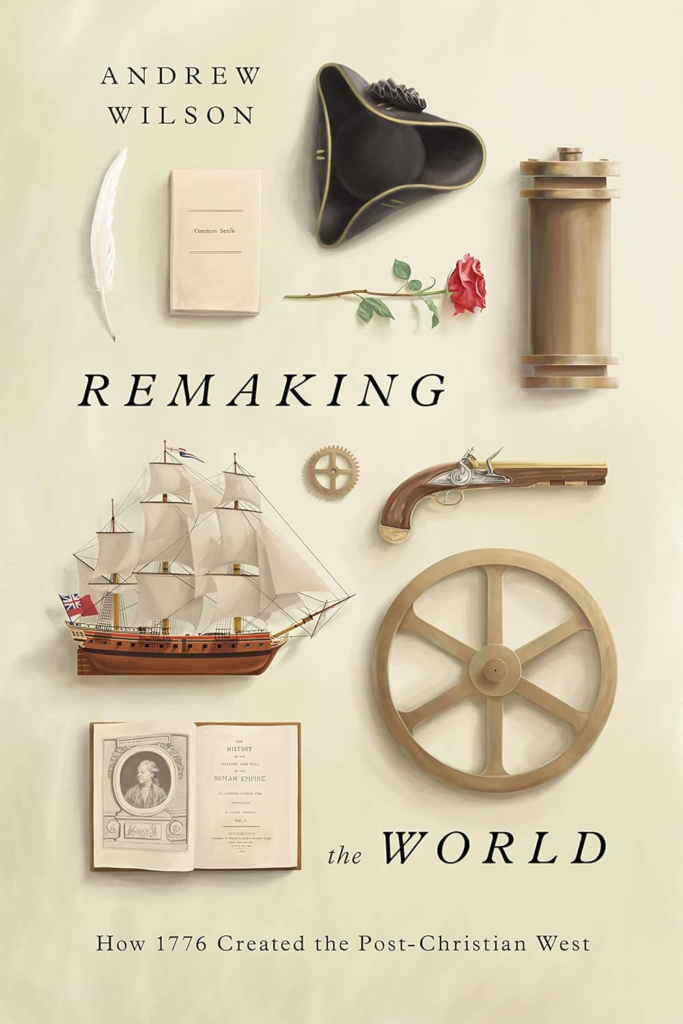
Around the 1770s, something remarkable happened: the world began to change rapidly, and embryonic ideas blossomed into tangible realities. This book explores seven of these concepts that created the WIERDER world we live in today—Western, Industrialized, Educated, Romantic, Democratic, Ex-Christian, Rich. Notably, Wilson, a Christian, does something particularly compelling: he connects each idea to ministry in the contemporary world, offering guidance for how we might thoughtfully engage with culture in light of these concepts.
(2) Man’s Search for Meaning by Viktor Frankl (5 Stars)
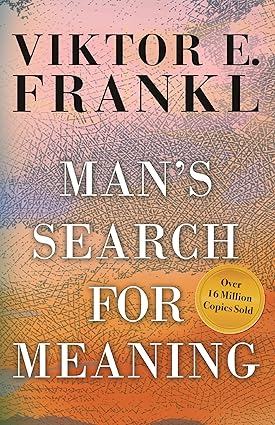
Frankl was a Jewish psychiatrist who endured the horrors of a Nazi concentration camp during the Holocaust. Confronted with his own suffering and the suffering and loss of his parents, brother and wife in the camps, he wrote a deeply personal account of what he learned about suffering, human resilience, and the one thing we can control when everything else is stripped away: our response.
Frankl developed a psychological approach known as logotherapy, which argues that the search for meaning is the central pursuit of human life. He was influential in popularizing the idea that we must “find our own meaning.” While Christians rightly reject this aspect of his philosophy, affirming instead that our ultimate purpose is rooted in the glory of God, there is much truth in his call to reject victimhood and take personal responsibility for our responses in every circumstance.
I was first introduced to this book when I read Tools of Titans and Tribe of Mentors by Tim Ferriss. I was intrigued by the large number of highly successful people who described it as one of the most significant books they had ever read, and I decided to see for myself. It is a difficult read, yet hopeful and empowering.
(3) Command and Control: Nuclear Weapons, the Damascus Accident, and the Illusion of Safety by Eric Schlosser (4.5 Stars)
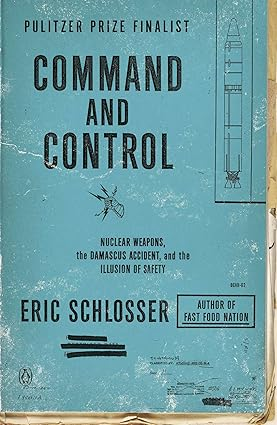
We’ve been living in the atomic era since 1945, and remarkably, no atomic bomb has ever been accidentally detonated in peace or deliberately detonated in war since then. That alone is astonishing. Almost as soon as I picked up this book, I was hooked. The stories are unbelievable: we’ve lost atomic bombs, accidentally dropped them on our own territory, shared nuclear weapons with foreign nations with little to no oversight, and even built bombs we assumed might one day detonate by accident—and yet, catastrophe has somehow been avoided. If you want to grasp how truly wild the Cold War era was, this book is essential reading.
(4) Rubicon: The Triumph and Tragedy of the Roman Republic by Tom Holland (4.5 Stars)
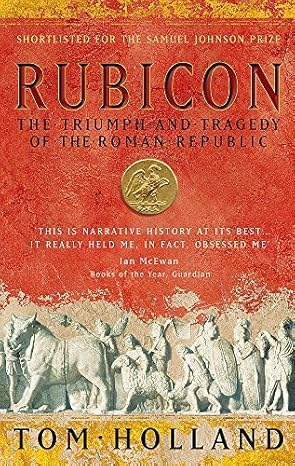
Tom Holland (not the actor) wrote the excellent book Dominion: How the Christian Revolution Remade the World, which I reviewed previously. In this work, he takes readers back to the final days of the Roman Republic, just before the time of Christ. His literary style has been described as “literary, almost mythic,” and he tends to portray “histories that trace civilizational shifts.” While this book delves deeply into the intricacies of individuals and politics—something some readers may find dense—I found it vast and sweeping in its scope.
(5) The Last Days of the Incas by Kim MacQuarrie (4.5 Stars)
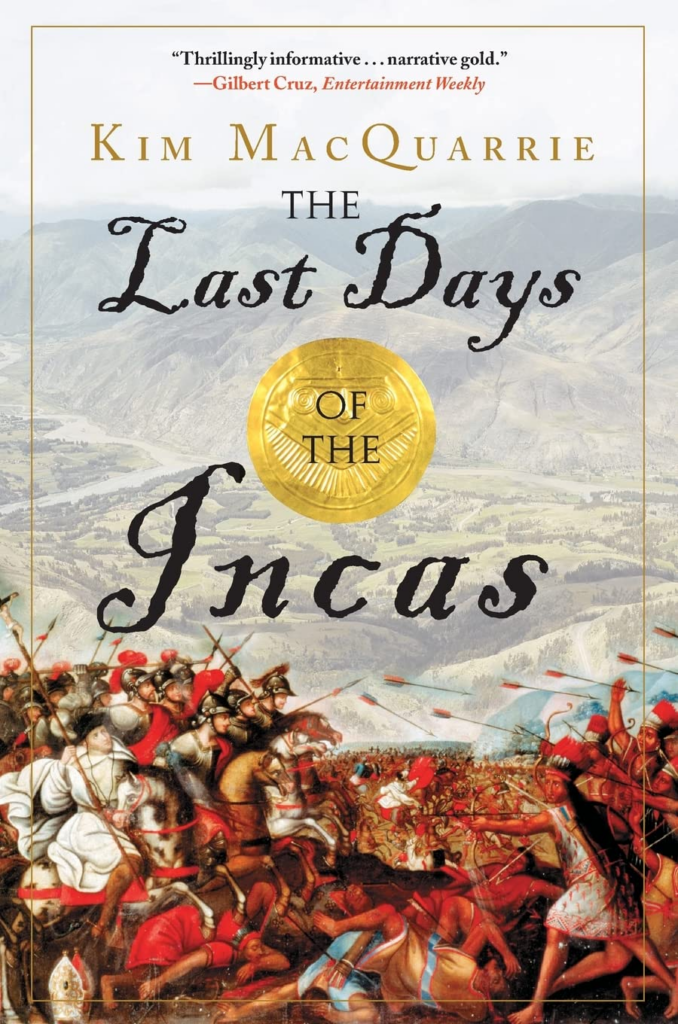
In 1531, the Spanish adventurer Francisco Pizarro landed on the coast of South America and ventured into a world unknown to Europeans. With fewer than 300 men, he managed to overthrow the Inca Empire—home to an estimated 10 million people—and establish a new colonial administration, the Viceroyalty of Peru, which would go on to extract almost 150 tons of gold for the Spanish crown.
This is not an easy book to read. Although the Spanish conquistadors claimed to be fighting for God and the cause of Christianity, their hypocrisy appears on almost every page. At times, the narrative is startling and even nauseating in its brutality. Yet the events it chronicles are astonishing, describing an entire civilization that has largely vanished from time and the unbelievable chain of events that led to its collapse. Reader discretion is advised due to graphic depictions of violence.
(6) Extreme Ownership: How US Navy Seals Lead and Win by Jocko Willink and Leif Babin (4.5 Stars)
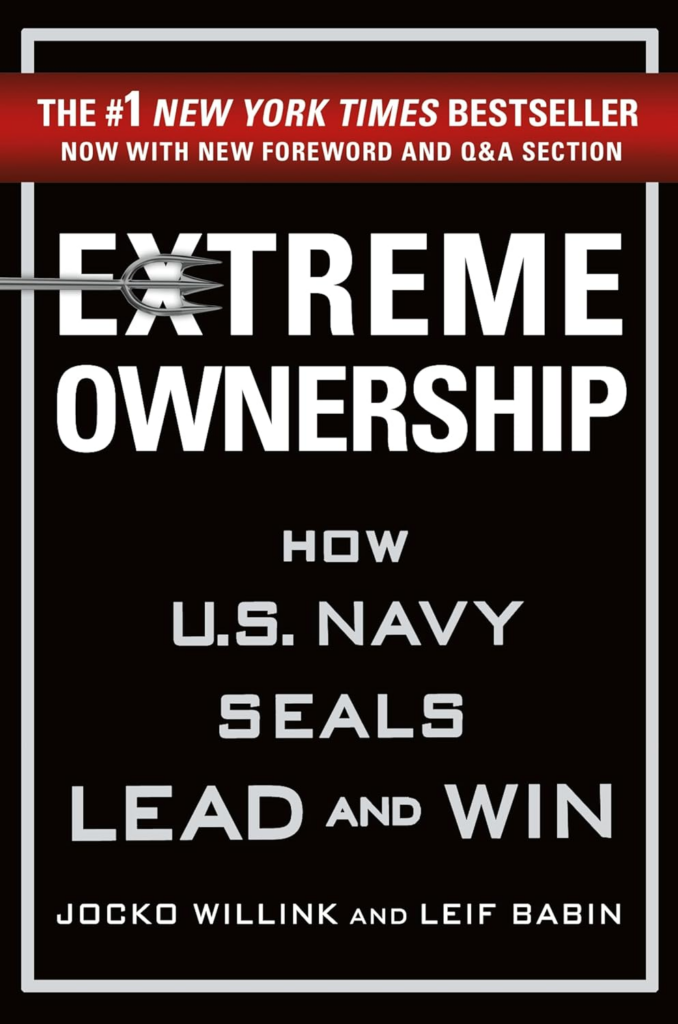
The leadership lessons this book contains are practical and compelling, illustrated with real-world examples from military experience, especially the war in Iraq. Willink and Babin advocate what they call “extreme ownership,” the idea that leaders must take full responsibility for their teams, including their failures. Paradoxically, this is what makes the concept so empowering: if we are responsible, then improvement is always possible.
(7) Elon Musk by Walter Isaacson (4 Stars)
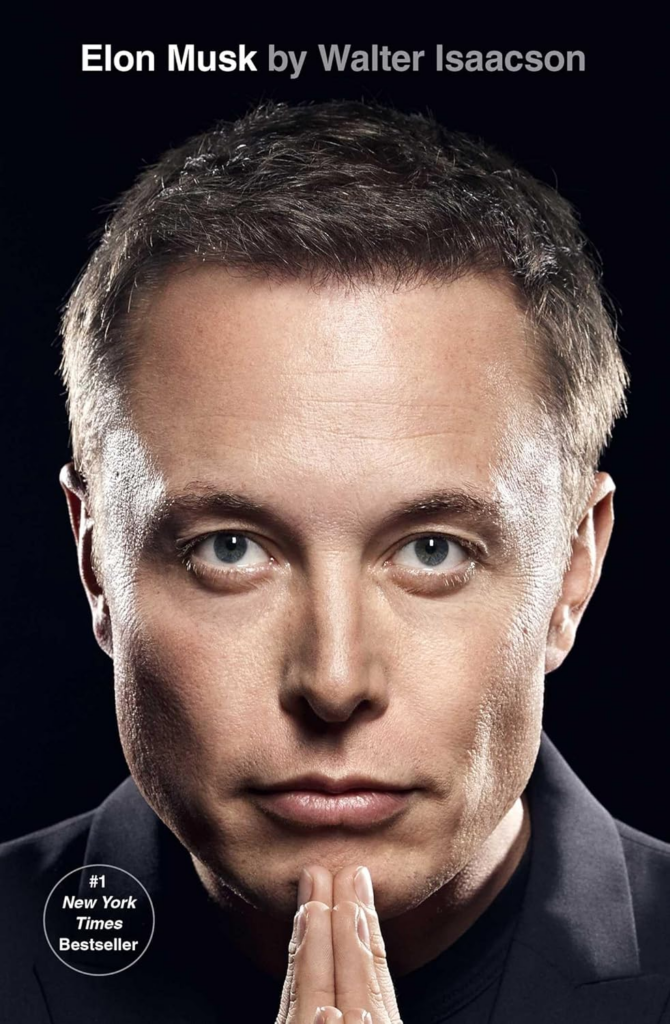
Musk is such a prominent public figure that, without this background, he can seem bizarre or contradictory. This book helped me better understand what drives him and what he is working toward. As the book portrays him, Musk sees himself as being on a mission to preserve human civilization. He founded SpaceX to transport humanity to Mars in anticipation of civilization’s eventual self-destruction on Earth. He entered politics because he believes the liberal socialist agenda is hastening societal decline. Tesla also fits into his vision: by enabling the adoption of electric vehicles, he hopes to slow climate change and buy humanity a little more time to perfect the technologies needed for long-term survival in space. The book does not shy away from his flaws or controversies, which makes it a more compelling portrait. It is, of course, incomplete, as it only covers his life up to the time of writing! Reader discretion is advised due to language.
(8) The Perfectionists: How Precision Engineers Created the Modern World by Simon Winchester (4 Stars)
Precision is such a familiar part of modern life that we rarely stop to think about it. We routinely swap parts on our cars and rely on screws that fit standardized tools without a second thought. But as this book demonstrates, the level of precision required for these everyday tasks was neither imaginable nor achievable until very recently. Once precision manufacturing emerged, it transformed society—leading from interchangeable parts and mass production to modern technologies like satellites, built to tolerance so fine they cannot even be detected by the naked eye.
(9) The Fate of the Day: The War for America, Fort Ticonderoga to Charleston, 1777-1780 by Rick Atkinson (4 Stars)
This is the second volume of Rick Atkinson’s Revolution trilogy. A long-anticipated book, it was finally published this year, and I picked it up almost immediately. It chronicles many of the most significant battles of the American Revolution, and Atkinson proves once again that he is a master of historical research. Years of intensive study went into this work, yet the narrative remains brisk and engaging, never bogging the reader down in unnecessary detail.
(10) Wave: A Memoir by Sonali Deraniyagala (4 Stars)
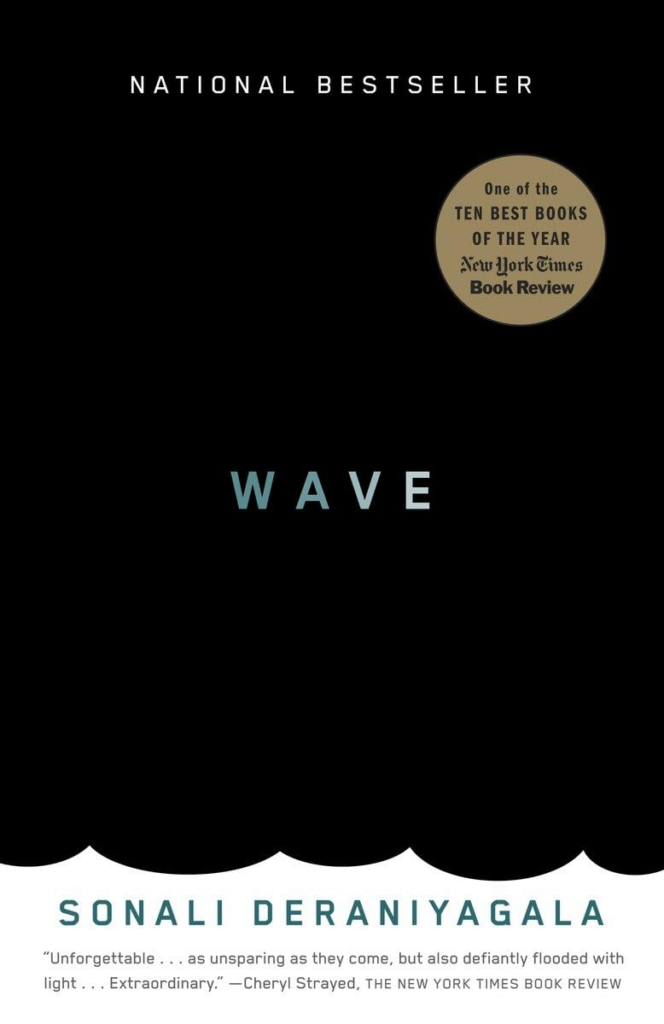
Joseph Stalin is often quoted as saying, “A single death is a tragedy, a million deaths is a statistic.” How true that is in the context of the 2004 Indian Ocean tsunami, which claimed the lives of nearly a quarter of a million people. This remains the deadliest natural disaster of the 21st century thus far. Numbers can distance us from the reality of suffering, but this autobiography brings that suffering sharply into focus. In it, Deraniyagala recounts her experience of the disaster, during which she lost her parents, husband, and both of her sons. One reviewer described the book as “the most exceptional book about grief I’ve ever read…. As unsparing as they come, but also defiantly flooded with light…. Extraordinary.” Reader discretion is advised due to language.
For more of my annual book recommendations, see the titles from 2024, 2023, 2022, 2021, 2020, 2019, and 2018.

In place of comments, I would love to hear from you personally. Please reach out to me via the Contact Page to share your thoughts and perspectives on this post!

Enjoying this content? Subscribe to receive it directly in your email, once a week.